


The climate tech sector is expanding rapidly as the need for decarbonization grows. According to a 2026 industry report by Fortune Business Insights, the sector is expected to grow from $39.14 billion in 2026 to $209.48 billion by 2034. With this growth comes one major problem for enterprises: competition.
To stand out and attract buyers, investors, and stakeholders, you need to do more than provide advanced technologies; you also need to explain your product, its value, and its impact on climate issues in a way your target audience understands.
The problem is, climate tech is inherently complex. Translating product specs and sustainability jargon into messaging that everyone, from technical teams to non-technical buyers, can understand is difficult. But it's non-negotiable. How you communicate directly affects whether your target audience trusts, adopts, and invests in your climate tech.
Climate tech is difficult to explain
Communicating climate tech clearly is far from easy. You not only have to break down complex climate tech terms, but also communicate in a way that speaks to both technical and non-technical audiences.
Technical complexity creates communication challenges
One of the biggest challenges in climate tech marketing is that non-specialist audiences often struggle to immediately understand products and the problems they solve. The climate tech industry is full of scientific terminology that can make it difficult to communicate your value clearly to non-technical teams. Here are some complexity challenges different climate tech brands might face:
- Carbon market traders and carbon capture specialists need to break down concepts such as carbon credits to their audiences.
- Businesses that specialize in Measurement, Reporting, and Verification (MRV) systems need to explain greenhouse gas (GHG) emissions measurement, data collection methodologies, and how their analytics platforms work.
- Climate SaaS brands must translate complex offerings, such as carbon accounting and environmental, social, and governance (ESG) performance tracking, into tangible business value.
- Brands offering emissions-tracking solutions must engage in discussions about carbon intensity and emissions baselines.
- Supply chain decarbonization solution providers need to demonstrate how their technologies enable audiences to measure and reduce GHG emissions across their entire value chains.
- Regenerative agriculture companies must address soil carbon sequestration.
While such terms and concepts might make sense to climate tech specialists, they can be too technical for non-specialist audiences. Their complexity creates a major gap between technical innovation and buyer understanding, which can make solutions feel inaccessible.
Climate tech must speak to multiple audiences
Many climate tech brands communicate with audiences with different levels of technical understanding. For example, while technical teams, sustainability stakeholders, and policymakers might understand tech speak, some investors and enterprise buyers might not.
The need to craft messaging that speaks to such diverse audiences adds to the difficulty of communicating complex technology. If you get too technical, you might lose investors who are not conversant with your industry. And, if your message is too simplistic, you might come across as unreliable to engineers and other specialists.
Speaking to different audiences also poses a challenge because they often have varying priorities. Investors, for example, might focus more on your technology's market potential and long-term growth opportunities, while enterprise buyers might prioritize the implementation timeline and operational efficiency. Similarly, policymakers might be more concerned about your tech's alignment with existing regulations, technical teams might want comprehensive details on its architecture, and sustainability stakeholders might prioritize transparency in reporting.
As a solution provider serving multiple target audiences, you'll often need to create different messages with varying points of focus and levels of technical detail to encourage climate technology adoption. Climeworks does this quite well — it has dedicated pages for different audiences, each with varied messaging.
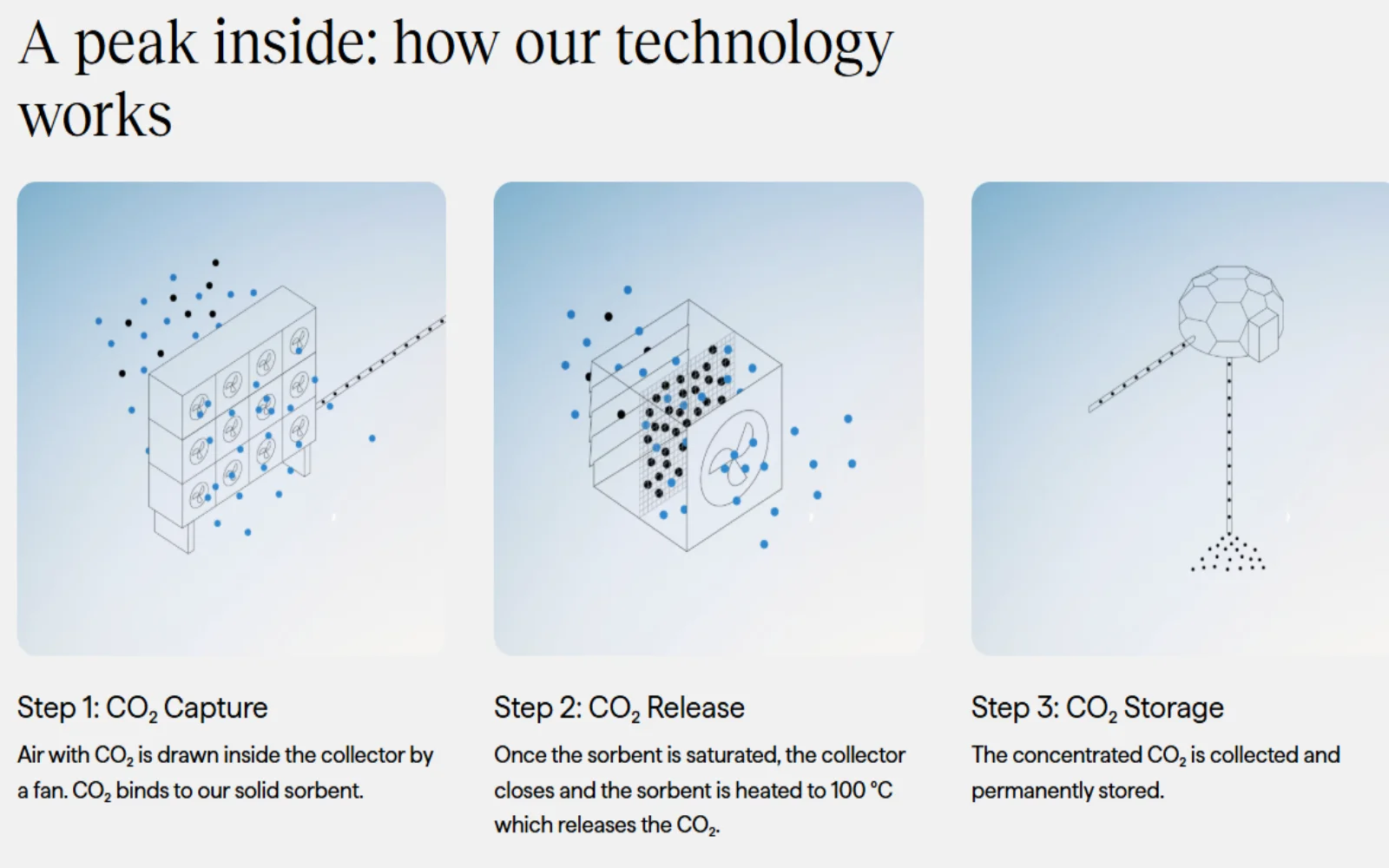
The company's "Direct Air Capture" page, for example, breaks down its technology in a way that speaks to technical teams.
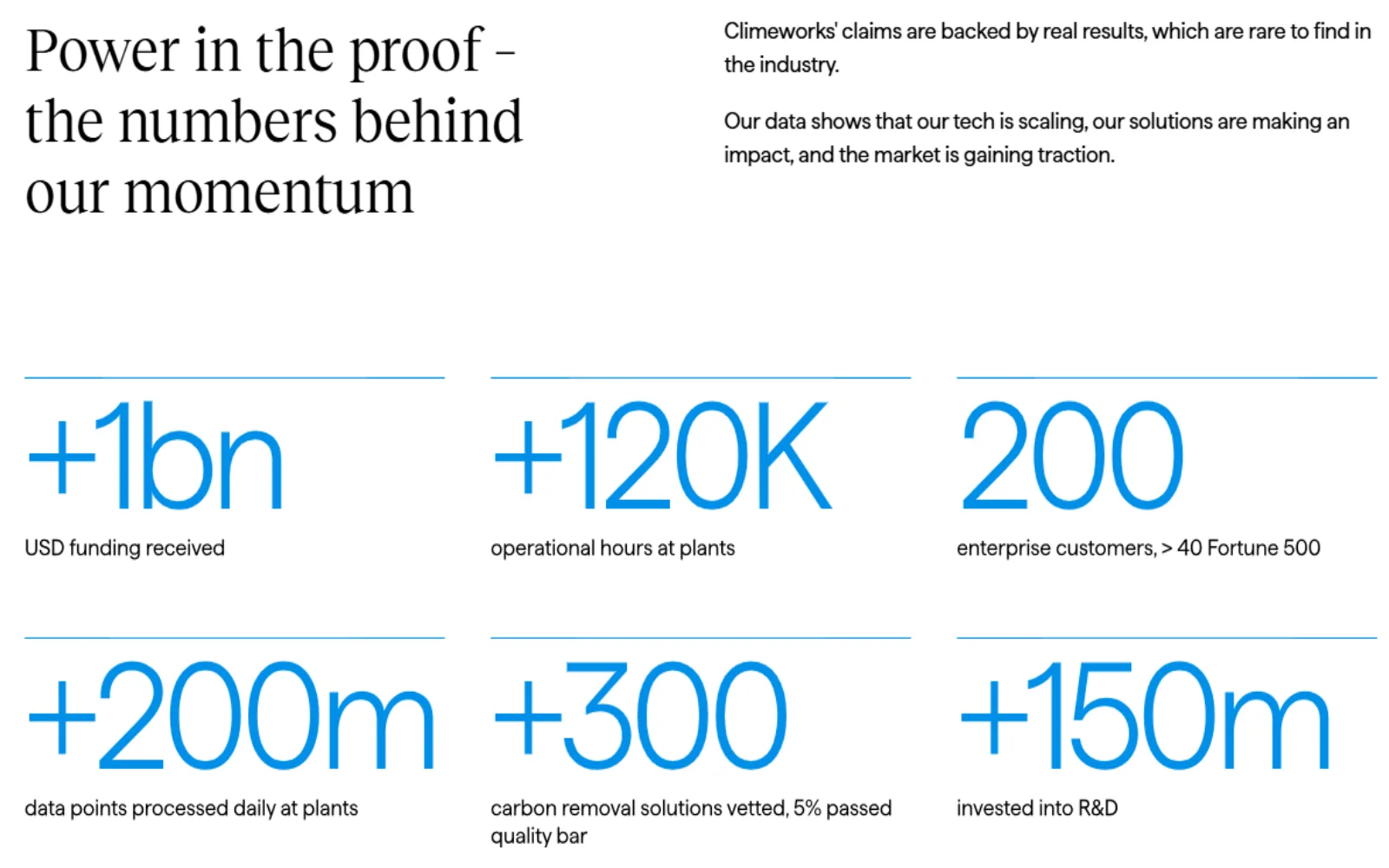
The "Investors" page, on the other hand, focuses on Climeworks' achievements and growth opportunities.
Confusion creates commercial friction
Unclear communication can slow down or even halt sales processes. When buyers don't understand your climate tech, how it works, or how it benefits them, they may hesitate to move forward with purchase discussions, ultimately affecting your conversion rates.
Buyers hesitate when messaging is unclear
Some buyers have limited knowledge of climate tech products and vital concepts such as carbon accounting. For such buyers, overly technical climate tech messaging can be difficult to follow, leading to cognitive overload.
Unfortunately for B2B climate tech marketing and sales teams, cognitive overload can cause decision paralysis and sales delays. The situation is even worse when buyers have to justify their purchase decisions to internal decision-makers. If they make overly vague sustainability claims or can't explain the value of your solution (because your communication is unclear), you might lose decision-makers' trust and buy-in.
Complexity can hurt conversions and adoption
Too simplistic sustainability claims, such as "eco-friendly" or "climate neutral," can weaken stakeholder trust and hurt conversions, especially when talking to technical teams.
However, the opposite is also true. Too complex messaging can slow down conversions and adoption. If you're too technical when explaining what makes your solution eco-friendly or climate-neutral to commercial teams, your sales team might need to repeatedly clarify terminology and break down concepts — which can take attention away from your product's value proposition and implementation.
Even with technical superiority, you might lose buyers to competitors if your messaging is too vague or overly technical. To avoid this, balance simplicity and complexity when preparing communication assets for both technical and commercial teams. Simplify concepts without being vague and provide accurate tech details without getting too technical.
When selling your climate tech to specialists and non-specialists separately, adapt your messaging to each group. Simplify your messaging for commercial buyers, and provide the specific technical details that make your climate tech superior when talking to technical teams.
Trust matters more in climate tech than most industries
A 2020 study in the Journal of Environmental Psychology found that successful climate change is contingent on audiences' trust in experts. Below are some reasons why:
Climate tech operates in a trust-sensitive environment
Your credibility is one of your greatest assets in the climate tech industry. Here's why:
- Rising greenwashing concerns: According to a 2025 sustainability study by the Capgemini Research Institute, 62% of consumers believe companies are engaging in greenwashing, a 10% increase from 2024 findings. As audiences become more aware of exaggerated climate claims and skeptical of sustainability messaging, the need for transparent tracking and communication becomes even greater.
- Huge capital investment: Businesses and investors typically need to invest thousands or hundreds of thousands of dollars in climate tech. To do so, they have to trust your offerings.
- Long-term stakes: Unlike with consumer tech, climate technologies don't always provide instant gratification. Companies need to use them for a while to realize their benefits, and it might take years for investors to get returns (especially with early-stage startups). Stakeholders often need to take a leap of faith when adopting the tech, something that requires trust.
Clear communication signals credibility
Trust is a huge factor for all climate tech stakeholders. Investors and partners want to know they can trust your brand to give them positive returns; enterprise buyers need reassurance that your technology can provide real business results; regulators need to know your solution meets compliance requirements; and customers want confidence that your tech actually supports sustainability.
One of the best ways to build trust with these stakeholders is through clear communication. Breaking down your tech, how it works, and its value proposition in ways key players understand shows you're transparent, which can help you secure your market position as a credible industry leader. It also reduces misunderstandings, potentially boosting adoption rates.
The best climate tech companies translate complexity clearly
Climate tech is complex, so it can be difficult to communicate clearly. But it's not impossible. Below are some tips to help you:
Clear communication is not oversimplification
The key to communicating clearly is to simplify concepts and translate complexity effectively without oversimplifying your messaging. Here are the differences between the three concepts:
- Simplifying: Involves breaking down products' technical features and complex climate-tech jargon without omitting key details to provide a better understanding of your technology. For example, instead of saying "Our technology can help you quantify soil carbon sequestration," you could go with "Our technology helps measure the amount of carbon in your soil." The latter is simple enough for all audiences to understand, but not so simplistic that it omits your value proposition.
- Translating complexity effectively: Involves adapting jargon to readers' knowledge levels or connecting complex topics to concepts that target audiences already understand. This strategy takes audiences' knowledge and priorities into account when crafting a climate tech content strategy.
- Oversimplifying: Removes key details in messaging, often making tech or sustainability communication misleading or incomplete. For example, saying your technology is environmentally friendly instead of quantifying the portion of emissions it helps reduce can be misleading.
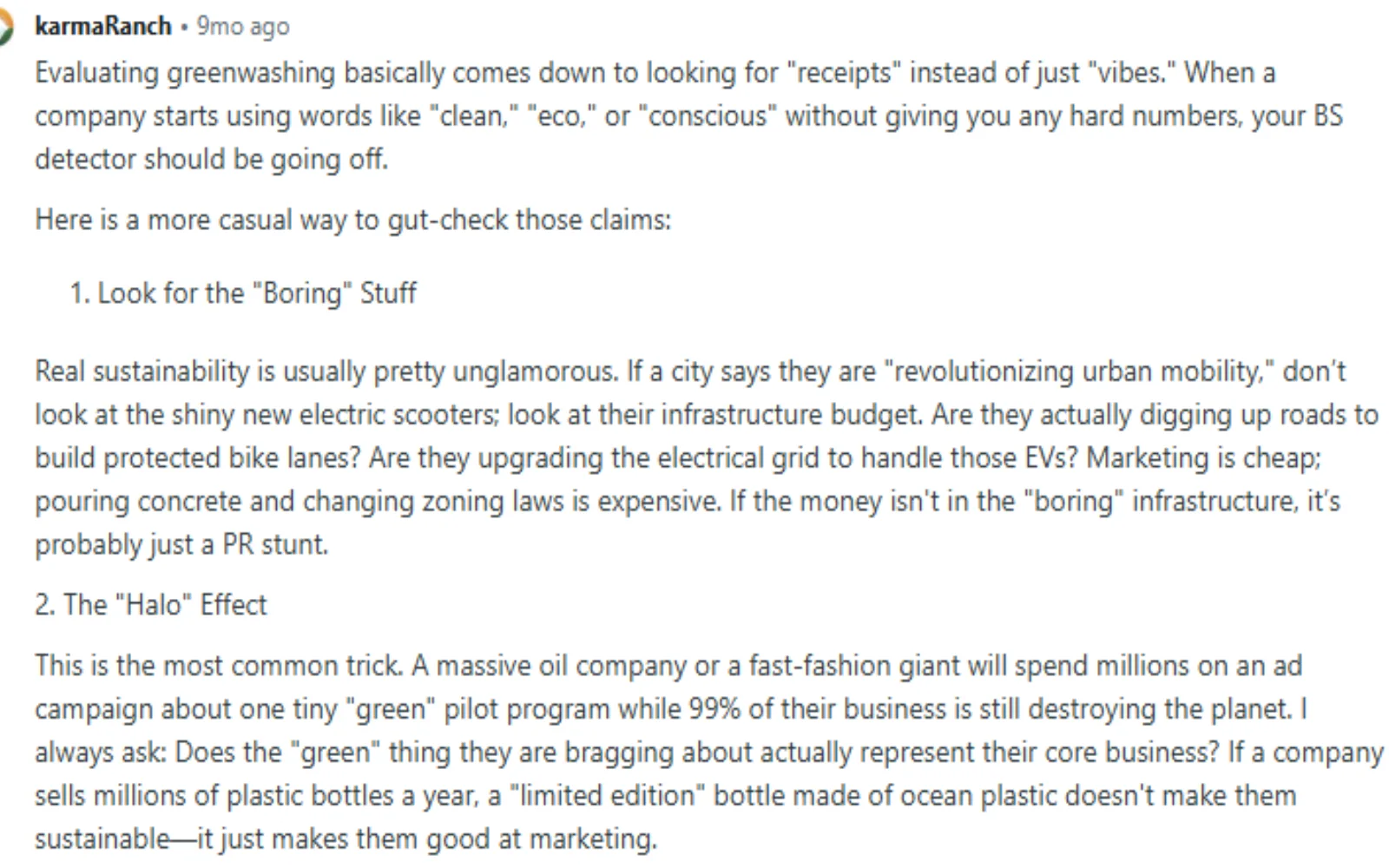
As you can see from this Reddit sustainability discussion, people are assessing cliate communication more critically. They don't want climate tech jargon, but they still expect your messaging to be detailed. This Reddit user, for example, says that they look for hard numbers when evaluating sustainability claims.
Technical storytelling improves understanding
Technical storytelling involves connecting technologies to practical outcomes that resonate with target audiences.
It's an excellent way to connect with commercial teams that might not be conversant with climate tech, as it simplifies concepts without omitting essential details. For example, you could replace "We provide scope 3 emissions visibility across your supply chain" with "We'll help you track indirect greenhouse gas emissions across your supply chain to help you mitigate risk and meet sustainability reporting requirements." This type of messaging clearly explains your product's value and connects it to real business outcomes.
Strong communication bridges technical and commercial worlds
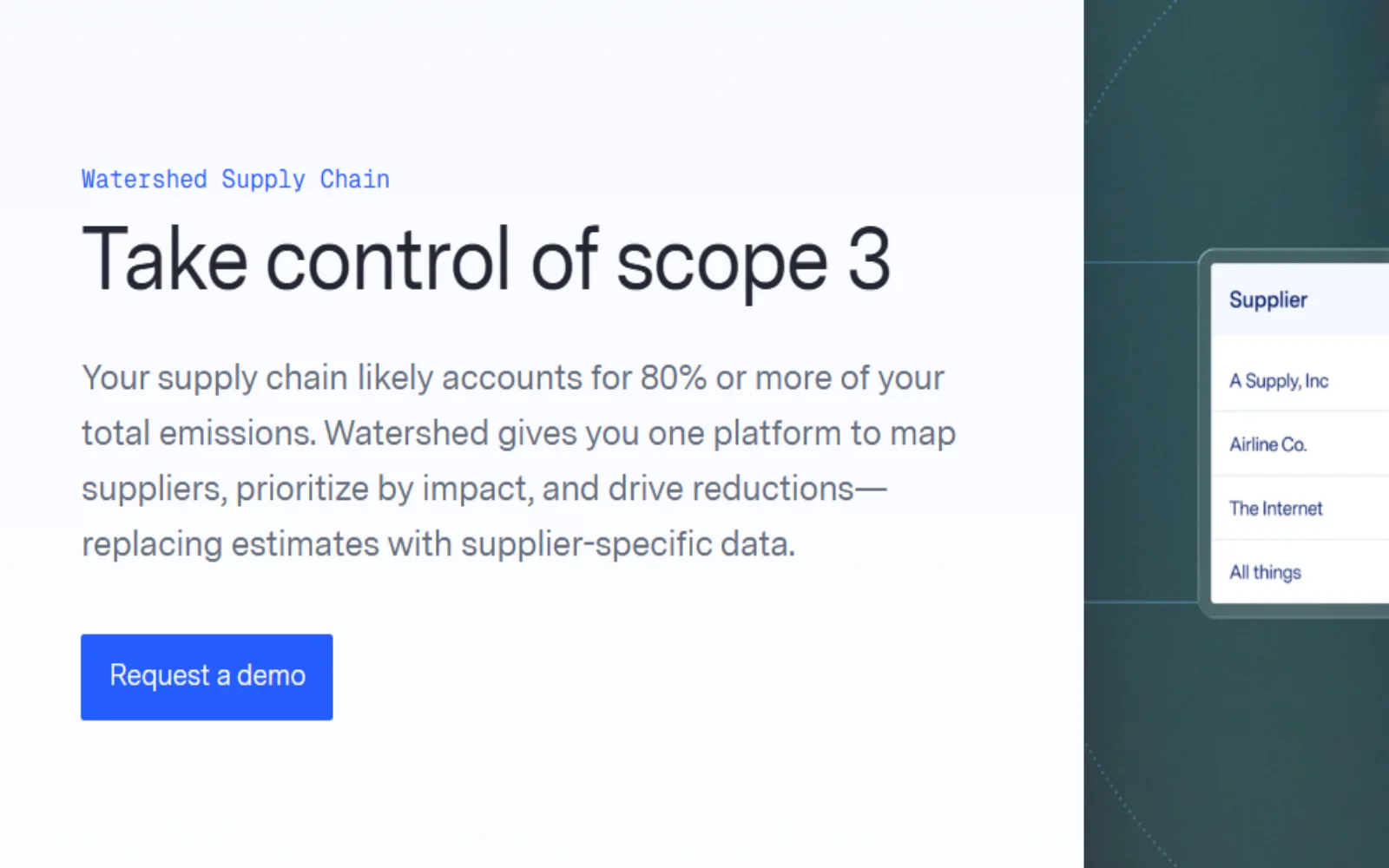
Strong climate tech communication doesn't just speak to one specific audience; it speaks to all. It connects technical ideas with commercial goals to align technical teams, marketers, sales teams, buyers, and sustainability stakeholders. Take this Watershed solutions page, for example. While it does contain technical climate terminology, such as "emissions" and "Scope 3," it's not overwhelming for non-technical visitors because it breaks down the complex language and connects it to real business value.
To align the technical and commercial worlds, translate features into outcomes: Rather than solely highlighting what your tech comes with, connect its capabilities to the real benefits it delivers to your audience. This way, it meets the needs of technical teams (who value technical specifications) and non-technical teams (who value outcomes).
Aligning the two worlds makes your innovation easier to understand across teams. This could, in turn, encourage climate technology adoption.
Communication is becoming a competitive advantage
Breaking down complex climate tech into messaging that each of your audiences understands is a lot of work. But it's worth it because it provides the edge you need to stand out from the competition. Here's why:
Many climate tech companies sound the same
Many brands are putting out generic, repetitive climate tech branding and messaging. Some fail to differentiate themselves because they believe superior innovation is enough to attract stakeholders. And others stick to repeated, proven-to-work communication pieces (such as articles detailing the connection between greenwashing and trust) because they're a safe option. When competing with such businesses, clear and unique communication assets can help you stand out.
Generic content is easier than ever to produce
With AI tools becoming more accessible and commoditized thought leadership flooding the internet, producing climate tech content at scale has never been easier. The problem is that much of this content says the same thing and offers little real insight.
As competition for stakeholder attention grows, clear and differentiated messaging matters more than ever. To stand out and encourage adoption, climate tech brands need communication that explains their value in a way audiences immediately understand.
Clear positioning creates strategic advantage
Clearly communicating what your product does, who it helps, and why it matters reduces confusion and uncertainty. Enterprise buyers and investors are far more likely to adopt or support technology they understand.
Explaining complex concepts in a transparent and straightforward way also strengthens your brand’s credibility. Over time, that credibility can become a major competitive advantage.
Clear climate tech communication enhances stakeholder engagement efforts
While great technology is crucial for survival in the climate tech industry, it's no longer enough on its own. To attract investors, enterprise buyers, and potential partners, you also need to clearly communicate your products and their value propositions.
Clear communication reduces adoption friction and builds brand credibility — both of which can lead to higher conversions. And with companies increasingly producing generic content, it's also becoming a competitive advantage. When you tailor messaging to your audiences' technical expertise and priorities, the chances of standing out among competitors increase.
Oaklyth enhances B2B climate tech marketing efforts by creating search-driven content that connects with readers. Our team can customize communication to each of your target audience's needs to help you build trust and encourage tech adoption.
Need help translating climate tech complexity effectively? Get in touch today and let’s talk about it.


