


“Right… so the solution is to start farming with charcoal now?”
A couple of those in the group laughed, while others just looked at me, maybe trying to figure out if I was joking.
I tried to explain that biochar wasn’t the same as the charcoal they use for cooking — that this black, dusty material could actually improve soil health and reduce fertilizer costs. But at that moment, it didn’t really matter how I explained it.
No one was buying it.
Fast forward seven years, and biochar is no longer an obscure idea whispered in sustainability circles. It has been featured on national TV and covered in newspapers. Across the country, farmers are turning rice husks, sugarcane bagasse, and Salvinia molesta, among other residues, into soil amendments that improve yields and reduce dependence on expensive inputs.
And yet, despite the growing awareness and evidence, biochar adoption in Kenya remains limited.
Talk to most farmers today, and biochar barely comes up. The conversations are still dominated by fertilizer prices, government subsidies, rainfall patterns, and quality of seeds. The same pressures as before.
Why is that? Why aren’t farmers in Kenya adopting biochar en masse, when it could ease some of the pressures they face every day?
In this article, I do my best to explain why.
But first…
What is biochar and why does it matter?
Biochar is a charcoal-like substance made from heating organic biomass, such as agricultural waste, in an oxygen-deprived environment through a process known as pyrolysis.
During pyrolysis, the carbon-containing biomass (the feedstock) is decomposed into small molecules of gas and solids. Some of the gas cools to become a biofuel, while the remaining gas maintains its form (syngas). The solid then becomes biochar.
The characteristics of biochar will vary significantly depending on the feedstock and heat used in pyrolysis. In general, it’s black, lightweight, highly porous, and contains carbon that makes it useful for climate and agricultural interventions.
Benefits of biochar
Biochar is an attractive, cost-effective solution for farmers seeking to improve soil quality, increase crop yield, and mitigate climate change.
Increases soil carbon content
Biochar has a stable structure that can hold up to 80% carbon and is resistant to decomposition and decay. When it is added to the soil, the carbon remains there for hundreds, or even thousands of years, without returning to the atmosphere as CO2.
Carbon is a critical element of healthy soil and influences soil structure, water retention, and nutrient cycling, all of which support vigorous plant growth and production.
Thanks to its ability to sequester carbon for years, biochar is also an exceptionally powerful tool for combating climate change. A 2022 study estimates that biochar can store roughly 2.68 tCO₂e per tonne of material, locking carbon away for the long term. In contrast, common alternatives like tree planting typically sequester only about 4–5 tCO₂e per hectare per year, and only while trees are actively growing.
If you’re looking to improve soil health and protect the future of your planet at the same time, biochar is an incredible option.
Improves soil-water holding capacity
Over 80% of Kenya’s land is arid or semi-arid, and agriculture, which employs roughly 85% of Kenya’s poor population, is predominantly rain-fed, making it extremely vulnerable to rainfall variability. Studies have shown that the use of biochar as a soil amendment can greatly enhance its water retention capacity.
Biochar is highly porous with a high surface area, which gives it a vast pore volume. The structure allows it to absorb large amounts of water and nutrients within its pores. Soils with improved water-retention capacity require less irrigation and produce higher crop yields. And as water shortages become a thorn in the flesh for most Kenyan farmers, the soil’s ability to retain water could influence its ability to produce crops, and consequently, our future food security.
Supports microbial activity
The intricate structure and porosity of biochar (combined with its resistance to decay and high carbon content) create an environment well suited to microbial life. When it’s applied to the soil, the microbial communities become more active and diverse.
An increase in microbial activity comes with a ton of benefits, including:
- Improving nutrient cycling, leading to more nutrient availability for crops
- Destroying harmful pathogens as the beneficial microbes outcompete the virulent pathogens for resources
- Creating soil structure that further improves the water retention capacity of the soil.
- Sequestering carbon by converting organic matter into stable soil compounds (like humus) that persist in the soil for long periods instead of being released as CO2.
Adjusts soil pH
About 63% of arable land in Kenya has acidic soils, with 32% of that land classified as strongly acidic. And while some regions have naturally acidic soils, much of this comes down to the overuse of synthetic fertilizers. Acidic soils have low pH (< 5.5) and are commonly associated with severe aluminum (Al) toxicity, which stymies root elongation and interferes with plant uptake of nutrients.
Enters biochar.
Because biochar is usually pH-neutral, it helps balance acidic soils by keeping pH levels more stable and preventing rapid fluctuations. On the other hand, in highly alkaline soils with high pH, biochar acts as a neutralizer by absorbing excess alkalinity.
So, whether your area has high-acid or high-alkaline soils, biochar will help you maintain an optimal pH range for better plant growth and yield.
Enriches organic fertilizer
Adding biochar to organic fertilizers such as farmyard manure, slurry, compost, or poultry litter — or even using it in animal bedding — can enhance the nutrients available to crops while cutting down carbon and nitrogen losses. According to a 2025 study published in Nature, applying biochar-based organic fertilizers can enhance nitrogen (N) retention and availability in soil by up to 47%, meaning nearly half more of that valuable nutrient stays where it’s needed.
In practical terms, this can:
- Improve crop growth and yields by making more nutrients available.
- Reduce fertilizer costs since less nitrogen is wasted.
- Make better use of manure and on-farm resources.
And that’s not all. Biochar can also be used as a surface cover on open slurry stores to help reduce odors and trap nutrients that would otherwise be lost. It’s a great option if you’re looking to boost nutrient efficiency both after application and during storage.
Key factors hindering biochar adoption in Kenya (with recommendations!)
The potential of biochar to revolutionize agriculture in Kenya and across Africa is well established. A 2019 study assessing its impact on soil fertility and crop yields found seasonal yield increases of about 1.2 Mg ha⁻¹ for maize and 0.4 Mg ha⁻¹ for soybeans, with long-term trials showing consistent benefits over more than a decade of continuous application.
The issue, then, is not whether biochar works in Kenya (it clearly does) but why adoption has remained slow. Several key barriers stand in the way:
High upfront costs
Biochar production, whether on-farm or commercially, involves high upfront costs. You may need to invest in pyrolysis units or kilns, feedstock collection and preparation, transport, handling, and crushing tools, just to name a few. Consider that a medium-sized pyrolysis machine can cost around $15,000 (almost 2 million Kenyan shillings), and this does not even include the costs of importing, transporting, and installing the equipment, and you will see why the average smallholder farmer in Kenya may hesitate to invest in biochar production, even if they understand its benefits.
Of course, there are big players in the market producing biochar, and farmers can buy from them instead of producing it themselves. The challenge is that biochar is not yet ubiquitously available or as affordable as conventionally subsidized fertilizers. For smallholder farmers, the cost-benefit analysis, factoring in transport and application, remains a stumbling block.
As if that isn’t challenging enough, Kenyan smallholder farmers struggle to access credit. Because of the perceived high risks in farming, such as pests and diseases, unpredictable weather conditions, and price volatility, access to commercial financing in the agriculture sector remains low. The limited access to finance significantly hinders adoption. In a study conducted among 384 farming households in the sub-humid regions of Western Kenya, about 36.45% of farmers who adopted biochar had access to credit, compared to only 4.26% of those who did not adopt it. On the flip side, 95.74 of non-adopters did not have access to credit, showing just how important financing is to its uptake.
Recommendations
- Promote community biochar production models where farmer groups or cooperatives share costs, resources, and technical expertise to reduce individual investment requirements and build local capacity.
- Biochar companies, NGOs, and other relevant stakeholders should partner with SACCOs and MFIs to structure low-risk financing options (e.g., group loans or lease-to-own plans) so farmers can acquire kilns and repay gradually from production income.
Lack of a clear regulatory framework and support
In Africa, Kenya has been among the first few countries to embrace the circular economy (CE), even formulating specific policies and laws such as the Sustainable Waste Management Act (2022) and the Extended Producer Responsibility (EPR) frameworks to guide the implementation of CE practices. Despite this, there is a lack of explicit policy guidance on biochar production and commercialization, which has slowed market development and adoption.
According to the Stockholm Environment Institute, important questions remain unanswered in Kenya, including:
- What legally defines biochar?
- How can it be clearly differentiated from charcoal?
- Which quality standards should apply?
- How can sustainable sourcing of biomass be guaranteed?
The lack of regulatory support is also reflected in the Kenyan government’s failure to provide financial incentives, such as subsidies and grants, to encourage biochar production. While some farmers may have the knowledge and willingness to produce biochar, the lack of funds and government backing leaves them powerless.
Recommendations
- The National government, specifically the Ministry of Agriculture, in partnership with the Ministry of Environment, Climate Change, and Forestry, should establish clear definitions and quality standards for biochar to differentiate it from charcoal and guide the market.
- County governments should introduce targeted incentives, such as input subsidies or tax relief, for local biochar producers and users.
Low awareness and knowledge of biochar
Consistent biochar production requires a high level of technical knowledge and expertise. You need a good understanding of input variables, such as suitable feedstocks, particle size, moisture content, heating rate, residence time, and oxygen levels during pyrolysis. Then, output variables, including carbon content, ash content, surface area, porosity, and nutrient availability.
To put it simply, producing high-quality biochar is difficult, and many farmers in Kenya don’t yet have the knowledge or expertise to do so — at least not at scale.
Beyond basic familiarity, awareness of biochar includes understanding how it works, how it improves soil health, how to apply it, and how it fits into improved farming systems. Without adequate awareness, most farmers are unlikely to explore biochar, choosing instead to stick to their routine farming practices.
Recommendations
- NGOs, climate startups, and other development partners should set up demonstration plots showing side-by-side crop performance with and without biochar. These will allow farmers to learn how biochar works and how to apply it properly before investing their own time and resources.
- Farmer education programs and extension services should extend to farmer field schools, barazas, and local radio to reach more people in rural areas.
- Agri-input companies should integrate biochar into existing soil fertility and composting programs instead of presenting it as a separate technology.
Training gaps
Closely connected to the low awareness, many farmers are introduced to biochar through short projects or trials, but training is often one-off and lacks follow-up support. In most cases, farmers learn the basics, but don’t get enough guidance to apply biochar correctly over time or adapt it to their own soils and crops. Field research in Kenya shows that this “train-and-exit” approach often leads to uneven use, where some farmers get it right while others struggle.
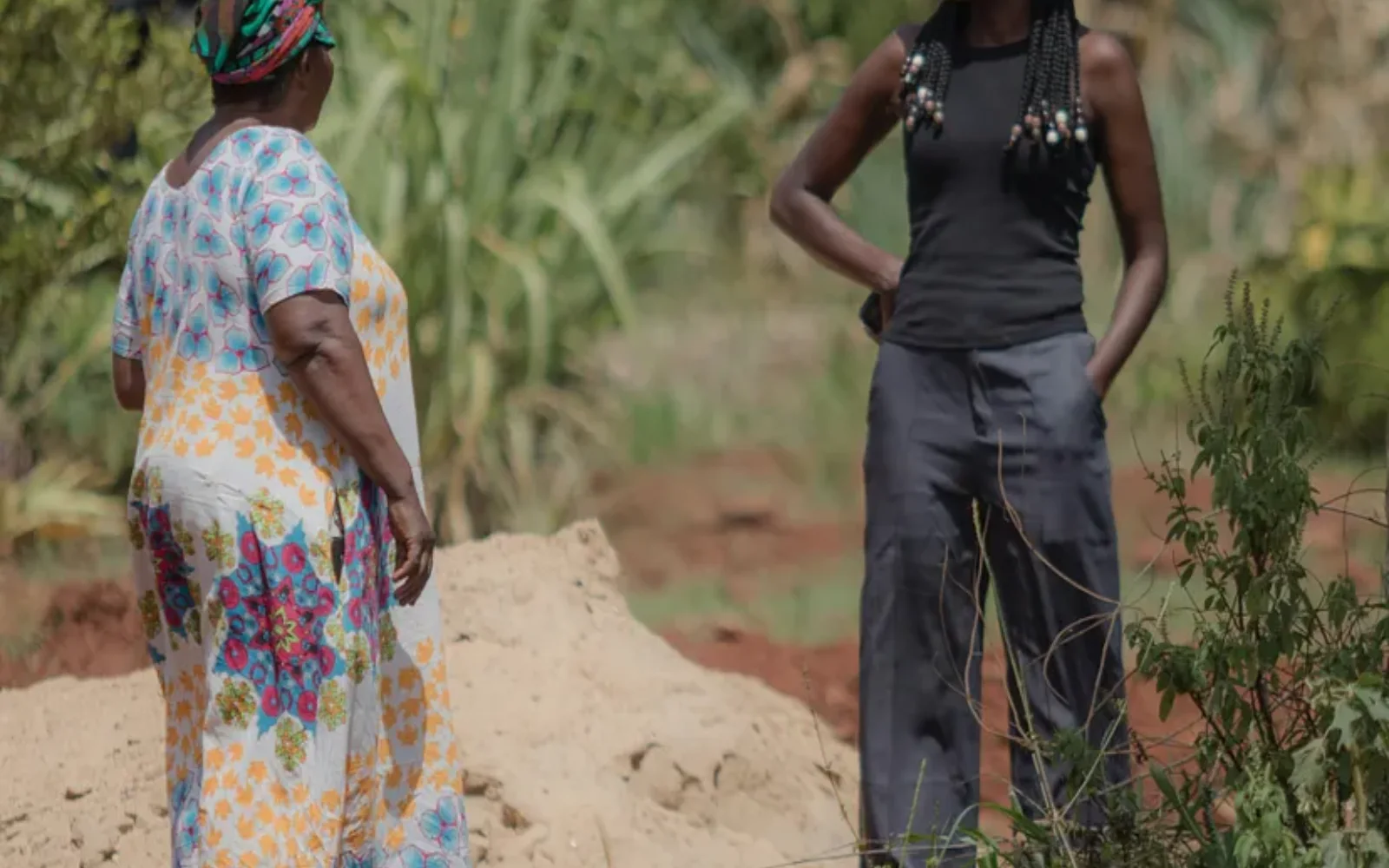
But the problem isn’t just access to training. It’s also the quality and consistency of that training. In practice, many extension systems are already stretched, and newer technologies like biochar are not always well understood at the field level. This makes it difficult for extension officers to provide clear, hands-on guidance. As a result, farmers often rely on trial and error or copy what others are doing, which can lead to the spread of both good and bad practices.
There are even cases where farmers try biochar and, after seeing poor results, conclude that it doesn’t work. Yet, the issue could be that they used the wrong kind of biochar for their soil, or applied too much or too little of it. Others see biochar as a full replacement for other inputs like compost or fertilizer, only to be disappointed when they don’t get a 35% yield increase. Without proper guidance, these mistakes keep showing up, slowing wider adoption.
Recommendations
- Extension programs should shift from one-off sessions to season-long support, including follow-up visits during planting and harvesting.
- Extension officers should be thoroughly trained on biochar and its applications to ensure they fully understand it before cascading knowledge.
- Farmer groups should promote peer-to-peer learning, where experienced farmers train others within their communities. This will address the gaps left by overstretched extension systems.
Production is linked to carbon credits
In Kenya, the international credit market primarily drives industrial-scale biochar production. And this is a good thing, in that it introduces a new economic incentive for farmers. However, smallholders often lack the equipment, financing mechanisms, or certification systems to produce biochar that meets the standards of international verification bodies like Puro.earth.
Other small-scale producers have the means to produce biochar credits that meet international standards but lack the ability to do so at scale. Unfortunately, the complexities of getting compensated on a voluntary carbon offset platform mean that the venture is only feasible if you’re doing it at scale. Consider, for example, that carbon credits are priced per metric tonne of carbon dioxide (or equivalent greenhouse gases) removed or avoided from the atmosphere. But most small-scale batch kilns only produce very small quantities per run, sometimes less than a kilogram, making it difficult for individual farmers to generate meaningful volumes. The result is that only a few big players who can produce at scale benefit from carbon offsets.
Without proper benefit-sharing arrangements, small-scale farmers, who make up the majority of the population, are locked out of the main financial incentive behind biochar, effectively slowing biochar adoption in Kenya.
Recommendations
- Carbon project developers and aggregators should organize farmers into cooperatives to ensure their combined output meets carbon credit thresholds.
- Private-sector buyers, such as tea estates, horticulture exporters, and NGOs, should stimulate local demand by purchasing biochar directly from small producers.
Communication gaps in biochar promotion
Another challenge lies in how biochar is promoted to farmers and the general public. Much of the messaging focuses heavily on biochar’s role in carbon sequestration and greenhouse gas reduction. While these are scientifically valid benefits (biochar can store carbon in the soil for centuries, remember?), they are largely global public goods, not direct income streams for farmers. As a result, farmers are asked to adopt a practice whose primary benefits are framed in climate terms, even though their immediate concerns are yield, cost, and income. This creates a disconnect. Research shows that smallholder farmers in Kenya are more motivated by direct economic benefits, such as improved productivity and income, while climate-related outcomes, like greenhouse gas reductions, are not a key driver of adoption.
At the same time, the language used to promote biochar, including terms like soil amendment, cation exchange capacity, and negative emissions technology, is highly technical and not easily understood by most farmers. Keep in mind that illiteracy rates in some rural parts of Kenya reach up to 68%. Language complexity makes it hard to build trust and understanding, especially when farmers already face challenges accessing training, financing, and certification systems.
In effect, poor communication reinforces the perception that biochar is a climate solution for global markets, not a practical tool for local farmers. And until messaging shifts toward clear, relatable benefits such as crop productivity, soil health, and cost savings, adoption will likely remain low.
Recommendations
- When talking to farmers, biochar project teams should redesign messaging to start with yield and income over carbon sequestration. And when discussing climate change and carbon removal, tie these issues to how they affect farmers, so they realize this isn’t a problem of the “West” but one that affects all of us.
- Carbon credit developers and international partners should separate farmer communication from investor communication. It’s probably best to keep all that complex carbon accounting language in your reports for Verra; otherwise, you risk confusing and alienating farmers.
Potential for scaling biochar in Kenya
Despite these barriers, biochar has strong potential for scaling in Kenya. For starters, the country has an abundant supply of agricultural residues, with estimates showing 14.5 million tonnes of crop waste generated annually, and utilization rates below 15%. The waste includes maize stalks, coffee husks, rice husks, sugarcane bagasse, and coconut shells, all of which are suitable candidates for biochar production. Besides, agriculture remains the backbone of the economy, contributing up to 33% of GDP and employing the majority of the rural population, which means biochar has a large, ready market if adoption barriers are addressed.
There is also a clear and urgent need for soil improvement. Many smallholder farms in Kenya face declining soil fertility and poor moisture retention, which directly affects yields. A growing number of farmers are also realizing it’s not business as usual, and paying more attention to sustainable farming practices and climate change. It’s only a matter of time before biochar goes mainstream as more farmers seek ways to improve soil health and tackle the ugly effects of climate change on agriculture.
Beyond agriculture, Kenya is increasingly well positioned to benefit from growing global demand for carbon removal solutions. A Climate Focus report estimates that Kenya’s agricultural sector alone could generate over 7 million tonnes of CO₂-equivalent annually by 2030 through carbon market opportunities, with biochar contributing a meaningful share. As carbon markets mature to include more smallholder-friendly models, more money will flow into biochar projects, and the market will expand.
Overall, these factors point to a clear conclusion that Kenya has all the conditions needed for biochar to scale. The raw materials, the need, and the market potential are already in place. Just a matter now of addressing the existing practical barriers, and biochar will move from promising pilot projects to widespread, farmer-led adoption.
Prepare for the future by promoting biochar adoption in Kenya
Biochar isn’t a new idea in Kenya, and it is certainly not untested. Across the country, farmers are already experimenting with locally available materials and seeing promising results. However, this powerful soil amendment has yet to fully cross into everyday farming practice, with barriers rooted in awareness gaps, limited access, high costs, policy uncertainty, and ineffective communication.
Addressing these challenges will require coordinated effort across the ecosystem, from policy and financing to training and market development. Alongside this, how biochar is communicated on the ground remains a critical piece of the puzzle. Organizations that are able to translate complex concepts into clear, practical messaging are far more likely to build trust, drive understanding, and support real adoption at scale.
If you are a climate or agriculture organization looking to strengthen your messaging and better reach your target audience, our team at Oaklyth would be happy to help. For the last 7 years, we have helped forward-thinking brands like yours turn complex ideas into content that connects with their audience and drives results. Feel free to get in touch.


